
Ultherapy is one of the better-known non-surgical treatments for mild to moderate skin laxity, and it is also one people often ask about in terms of cost. Quotes can vary a lot between clinics, which can make it hard to know what you are paying for. If you are considering Ultherapy in Dubai, this guide explains what affects the price, what a fair quote should include, how many sessions people usually have, and how Ultherapy compares with other ultrasound devices.
Ultherapy is a medical treatment, and suitability and results vary between individuals. A consultation with a licensed doctor is the only way to get an accurate, personalised quote.
What Ultherapy is
Ultherapy is a branded treatment that uses focused ultrasound energy to heat targeted layers beneath the skin, including the deeper skin and the supportive tissue layer underneath. This heat triggers the body’s natural healing response, including collagen remodelling, so changes develop gradually over the following months rather than straight away.
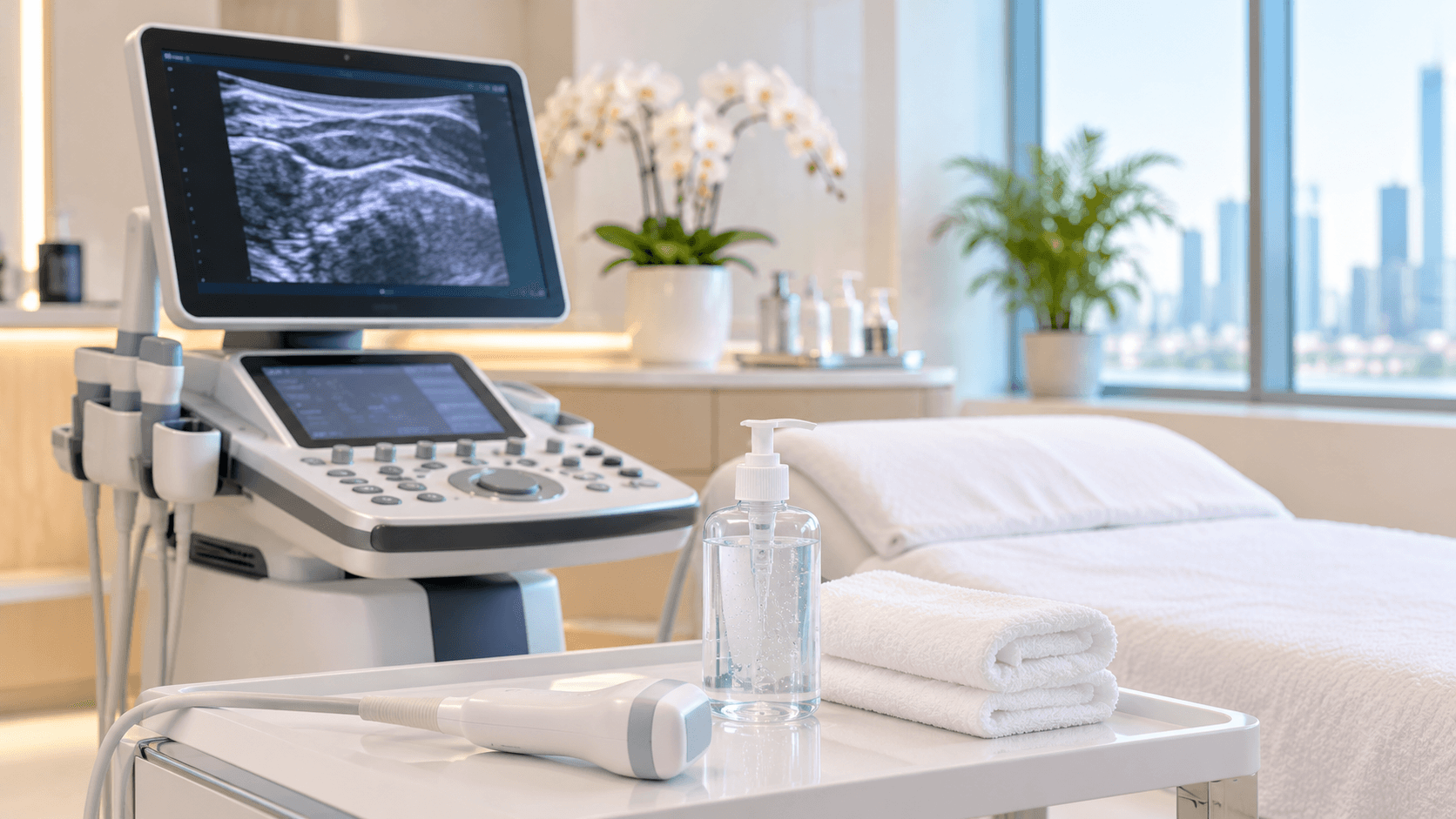
Its main distinguishing feature is built-in ultrasound imaging. The practitioner can see a live picture of the tissue layers during treatment, which helps them place energy at the intended depth.
Ultherapy is commonly used on the brow, cheeks, jawline, under the chin and the neck, and sometimes the décolletage. It is generally considered for people with mild to moderate laxity, not significant sagging, where surgical options may be more suitable.
What affects the price
Several factors shape the cost of Ultherapy treatment in Dubai.
Treatment areas. The more areas you treat, the more the treatment usually costs. A single area, such as under the chin or the brow, generally costs less than a full face and neck. Common packages group areas together, such as face, face and neck, or neck and décolletage.
Number of lines. Ultherapy energy is delivered in lines across the skin. The number of lines your practitioner uses depends on the size of the area, your skin and your treatment plan. More lines generally mean a longer treatment and a higher cost, because each line uses part of a single-use transducer cartridge.
The device and consumables. Ultherapy uses a specific device and transducers, which are costly to run. Genuine consumables are part of the price.
The practitioner. Treatment by an experienced, licensed practitioner who knows the face’s anatomy well costs more to provide. Experience matters for safety and for an even, natural result.
Comfort measures. Some clinics include numbing cream or other comfort options, while others charge separately.
Follow-up. Some quotes include a review appointment, others do not.
Because so many factors are involved, it is difficult to compare prices without knowing exactly what each quote includes.
What a quote should include
A clear, trustworthy quote should tell you:
- The device. Confirmation that it is a genuine Ultherapy device with authentic transducers
- The areas to be treated, listed specifically
- The approximate number of lines planned for each area
- Who will perform the treatment and their qualifications
- Comfort options, and whether they are included
- The consultation fee, if any, and whether it is deducted from treatment
- Follow-up, including whether a review appointment is included
- Payment terms, including deposits, refunds and cancellation
If a quote does not include the number of lines or areas, ask. Two quotes for “full face” can involve very different amounts of treatment.
Be cautious about prices that seem unusually low. They may reflect fewer lines, a different device marketed under a similar name, or used or non-genuine cartridges.
Number of sessions
Many people have Ultherapy as a single session, with changes developing gradually over the following months. Some people choose to repeat it later, depending on their skin, age, goals and how their skin responds.
There is no fixed rule for when or whether to repeat treatment. Your doctor can review your skin and discuss whether a further session would be worthwhile. Results vary between individuals, and no clinic can promise a specific outcome or how long changes will last.
A good treatment plan also considers sun protection, skincare and lifestyle, which affect skin ageing over time.
Ultherapy vs other ultrasound devices
Ultherapy is one of several devices that use focused ultrasound. Others are often described more generally as HIFU (high-intensity focused ultrasound) devices.
The main differences usually come down to:
- Imaging. Ultherapy includes live ultrasound imaging; many other devices do not.
- Sessions. Ultherapy is usually a single session, while some other devices may involve one or more sessions.
- Comfort. Sensation varies by device, depth and settings.
- Cost. Ultherapy is often priced higher than other ultrasound devices.
Neither option is automatically better. The right choice depends on your skin, your goals and your practitioner’s assessment. For a fuller comparison, read our HIFU vs Ultherapy guide.
Getting an accurate quote
The only way to know what Ultherapy will cost for you is a consultation. A doctor can examine your skin, discuss which areas would benefit, explain how many lines they recommend, and tell you whether Ultherapy is suitable. You can find out more about Ultherapy treatment on Skin111’s Ultherapy page.
FAQs
Why does Ultherapy cost vary so much between clinics? Quotes differ in the areas treated, the number of lines, the practitioner’s experience, comfort measures and follow-up. Ask each clinic exactly what is included so you can compare fairly.
Is Ultherapy priced per area or per line? Clinics often price by area or package, but the number of lines used within each area affects the cost and the treatment itself.
How many sessions will I need? Many people have a single session, and some choose to repeat it later. Your doctor will advise based on your skin and goals.
Why is Ultherapy often more expensive than other HIFU treatments? It uses a specific branded device with live imaging and single-use transducers, which affects running costs.
Is a cheaper quote a red flag? Not always, but very low prices can mean fewer lines, a different device or non-genuine cartridges. Ask which device and how many lines will be used.
Does the price include a consultation? It depends on the clinic. Some charge a consultation fee and deduct it from treatment, while others include it.