

Exosomes are one of the newest names in aesthetic and wellness medicine, and they are now offered in two very different ways: applied to or injected into the skin of the face, and infused into the bloodstream through an IV drip. Because both are called “exosome treatment”, it is easy to assume they are the same thing. They are not. If you are researching exosomes treatment, this guide explains what exosomes are, how facial treatment and IV infusion differ, what the evidence currently shows, and what to ask about safety and regulation.
Research into exosomes is still emerging. The information below is general, and any treatment should only be given after a medical assessment.
What exosomes are
Exosomes are tiny particles released by cells. They are much smaller than cells themselves and carry proteins, lipids and genetic material. Their natural role is communication: they help cells send signals to one another.
Because of this signalling role, researchers are studying whether exosomes could be used to influence processes such as healing and inflammation. Products used in clinics are derived from different sources, including human cell cultures, plant sources and others, and they vary widely in what they contain and how they are made. This means that two products both labelled “exosomes” can be quite different.
Exosome injections for the face
In aesthetic medicine, exosome injections for the face and topical exosome products are used with the aim of supporting skin quality. Common approaches include:
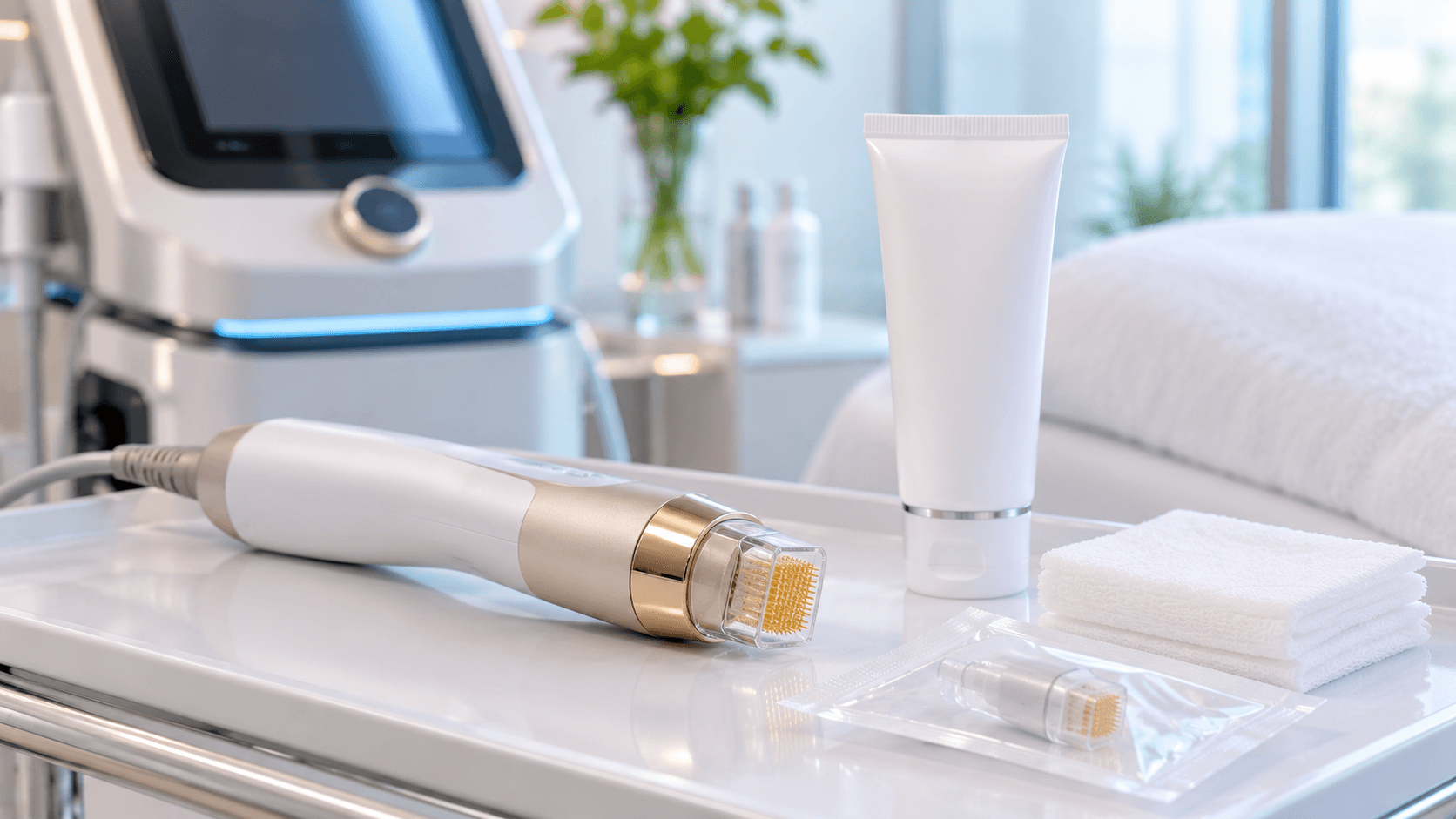
- Applying exosomes after a skin procedure, such as microneedling or fractional laser, which creates tiny channels in the skin
- Injecting exosome products into the skin, in some protocols and depending on the product
The goal is usually to support the skin’s appearance and recovery after treatment, such as texture, hydration and radiance. Facial exosome treatments are local: the product stays in or near the treated skin.
Typical short-term effects depend mainly on the procedure it is combined with, such as redness and mild swelling after microneedling.
Exosome IV infusion
Exosome IV therapy is a very different treatment. Here, an exosome product is infused into a vein, so it circulates through the whole body rather than staying in one area of skin.
IV exosome infusions are marketed for general wellness purposes. Because the product enters the bloodstream, the considerations around screening, product quality, sterility and safety are more significant than for a product applied to the skin.
An IV infusion should only be considered after a thorough medical assessment, with a doctor who can explain exactly what product is used, where it comes from, its regulatory status and what is known about its safety.
Key differences
| Facial exosome treatment | Exosome IV infusion | |
|---|---|---|
| How it is given | Applied to or injected into the skin, often after microneedling or laser | Infused into a vein |
| Where it acts | Locally, in the treated skin | Throughout the body |
| Typical aim | Supporting skin quality and recovery after a procedure | General wellness |
| Main considerations | The procedure it is combined with, skin reactions | Systemic safety, product source, sterility, regulation |
| Screening | Skin and medical history | More extensive medical screening |
The two treatments should not be treated as interchangeable. Choosing one does not mean the other is suitable, and the questions to ask are different for each.
What the evidence currently shows
It is important to be clear about where the science stands:
- Laboratory and early studies suggest exosomes play a role in cell signalling and may influence processes such as healing and inflammation.
- Clinical studies in aesthetic medicine are limited, often small, and frequently look at exosomes used alongside other procedures, which makes it hard to tell how much benefit comes from the exosomes themselves.
- Evidence for IV exosome infusions in healthy people is very limited, and their long-term effects are not well understood.
- Products vary widely, so findings from one product cannot be assumed to apply to another.
This means no clinic can honestly promise regeneration, anti-ageing or specific results from either treatment. If you choose to try exosome treatment, it should be with realistic expectations and full information.
Safety and regulation
Regulation of exosome products varies between countries and between product types. In some countries, regulators have warned the public about unapproved exosome products being marketed to treat health conditions.
Before any exosome treatment, ask:
- What product is used, and who manufactures it?
- What is the source of the exosomes?
- Is the product approved or registered for this use in the UAE?
- How is it stored and handled to keep it sterile?
- What evidence supports its use for my goal?
- What are the known risks, and what happens if I have a reaction?
Possible risks include allergic or immune reactions, infection, and, for IV use, the general risks of an infusion. Unknown long-term effects are also a consideration, particularly for IV use.
Only have exosome treatment at a licensed facility, with a licensed doctor who can answer these questions clearly. People who are pregnant or breastfeeding, have a history of cancer, have an autoimmune condition or are immunocompromised should discuss the risks carefully with their doctor first.
Choosing between them
Facial exosome treatment and exosome IV infusion are separate treatments with different aims, different risks and different questions to ask. If your goal is skin quality, facial exosomes treatment for the skin, usually combined with a procedure such as microneedling, is the more relevant option to discuss. Either way, start with a consultation and an honest conversation about the evidence.
FAQs
Are exosome injections and exosome IV the same treatment? No. Facial treatment works locally in the skin, while an IV infusion circulates through the whole body. They have different aims and different safety considerations.
Are exosomes proven to work? Research is still emerging. Early findings are interesting, but high-quality clinical evidence is limited, especially for IV use.
Can exosomes regenerate my skin? No treatment can honestly promise regeneration. Facial exosome products are used to support skin quality and recovery, and results vary.
Where do exosome products come from? Sources vary, including human cell cultures and plant sources. Ask your clinic exactly which product is used.
Is exosome IV therapy safe? Its long-term safety is not well understood. It should only be considered after a full medical assessment at a licensed facility.