
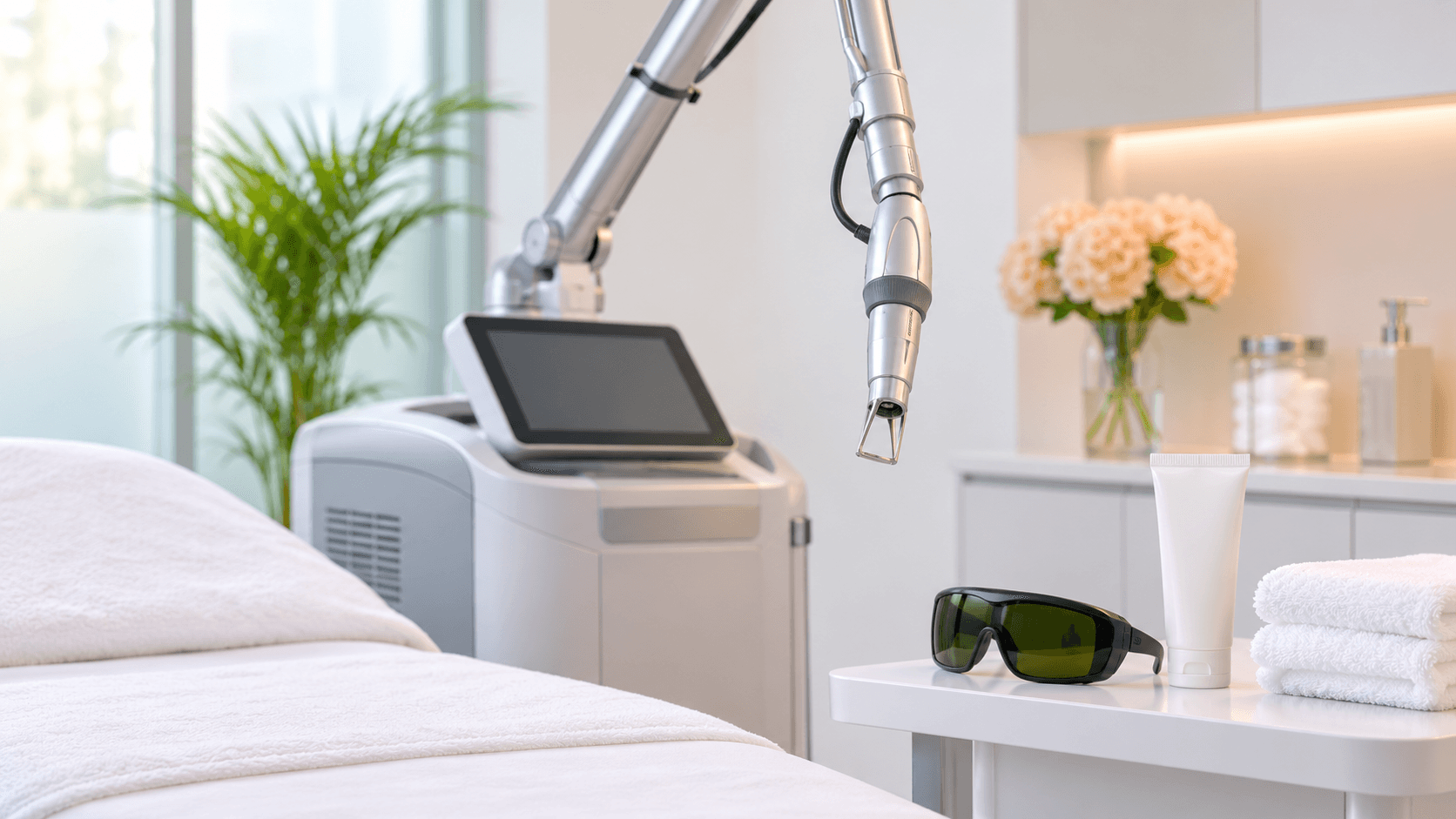
Lasers are among the most talked-about options for dark spots and uneven skin tone, but “laser for pigmentation” covers several different devices that work in different ways. Some are well suited to sun spots on fair skin. Others are chosen for deeper pigment or darker skin types. And for some pigmentation, a laser is not the best first step at all. If you are researching hyperpigmentation treatment in Dubai, this guide explains which types of pigmentation lasers can target, which lasers are used, how many sessions to expect and when another approach may be better.
Laser treatment is a medical procedure. Suitability depends on your skin type and the cause of your pigmentation, and a doctor should assess your skin before any treatment.
Pigmentation types lasers can target
Pigmentation happens when the skin produces extra melanin, the pigment that gives skin its colour. Where the pigment sits in the skin, and what caused it, affect how it responds to laser.
Lasers are commonly used for:
- Sun spots and age spots (solar lentigines). Flat brown spots from cumulative sun exposure. These often respond well to pigment-targeting lasers.
- Freckles. These can lighten with treatment but often return with sun exposure.
- Some birthmarks and deeper pigment, such as certain types found deeper in the skin, which need specific lasers and a specialist assessment.
- Post-inflammatory hyperpigmentation (PIH). Dark marks after acne or skin injury. Lasers are sometimes used cautiously, but PIH often improves with topical treatment and time.
- Melasma. A long-term, patchy pigmentation linked to hormones, sun and heat. Some lasers are used for melasma at very gentle settings, but it can return or even worsen, so it needs a careful, long-term plan.
A spot that is new, changing in size, shape or colour, bleeding or itchy should always be checked by a doctor before any cosmetic treatment.
Laser types used for pigmentation
Different lasers deliver light at different wavelengths and pulse lengths. These determine how deep the energy reaches and what it targets. Common types include:
- Q-switched lasers, such as Q-switched Nd:YAG, deliver very short, high-energy pulses that break up pigment into tiny particles, which the body then clears. Different wavelengths target pigment at different depths. Low-energy settings, sometimes called laser toning, are used in some melasma treatment plans.
- Picosecond lasers deliver even shorter pulses, measured in trillionths of a second. They are designed to break pigment into smaller particles with less heat.
- Fractional lasers, both non-ablative and ablative, treat tiny columns of skin at a time. They can help with pigmentation and texture together, but they involve more downtime.
- Intense pulsed light (IPL) is not a laser. It uses a broad spectrum of light and is often used for sun damage on lighter skin types.
The laser for pigmentation your doctor chooses will depend on your pigmentation type, its depth, your skin type and how much downtime you can accept.
Laser suitability by skin type
Skin type is one of the most important safety factors. Doctors often use the Fitzpatrick scale, from type I (very fair, always burns) to type VI (deeply pigmented, rarely burns).
Lasers target pigment, but they cannot always tell the difference between unwanted pigment and the normal pigment in your skin. In medium and darker skin types, which are common in the UAE, this raises the risk of:
- Post-inflammatory hyperpigmentation, where the treated area becomes darker rather than lighter
- Hypopigmentation, where patches become lighter than the surrounding skin
- Burns and blistering, if settings are too strong
This does not mean people with darker skin cannot have laser treatment. It means the device, wavelength and settings must be chosen carefully, often more conservatively, and sometimes after a preparation period with topical treatment. A test patch may be recommended.
When people ask about the best treatment for pigmentation on face skin, the honest answer is that it depends. The right choice is the one that suits your skin type and the type of pigmentation you have.
Number of sessions and spacing
The number of sessions varies widely depending on:
- The type of pigmentation. Some sun spots may need only a small number of sessions, while melasma usually needs a longer course and ongoing maintenance.
- The depth of the pigment. Deeper pigment generally needs more sessions.
- The laser used and its settings. Gentle settings for darker skin often mean more sessions at lower intensity.
- Your skin’s response.
Sessions are usually spaced several weeks apart to allow the skin to recover and the body to clear broken-down pigment. Your doctor should give you a treatment plan before you start and review your progress along the way.
Sun protection and aftercare
After treatment, treated spots may look darker for a short time before flaking away. Redness, mild swelling and sensitivity are common for a short period, depending on the laser.
Aftercare usually includes:
- Strict sun protection, with a broad-spectrum sunscreen, ideally tinted with iron oxides, reapplied regularly, plus shade and a hat
- Avoiding heat, saunas and intense exercise for the advised period
- Not picking or scrubbing flaking skin
- Gentle cleansing and moisturising
- Pausing active skincare such as retinoids or exfoliating acids until your doctor says it is safe
Sun protection is essential in the UAE climate. Without it, pigmentation can return quickly, and treated skin is more vulnerable to new pigment.
Contact your clinic if you notice blistering, increasing pain, signs of infection, or the treated area becoming darker over time.
When lasers are not the right choice
A laser is not always the best first step. Your doctor may suggest another approach, or a combination, if:
- You have melasma that is active or easily triggered, where gentle topicals and sun protection usually come first
- You have post-inflammatory marks that may fade with topical treatment and time
- You have a recent tan or sunburn
- You are pregnant or breastfeeding
- You take medicines that increase light sensitivity, or have recently taken isotretinoin
- You are prone to keloid scarring
- The cause of the pigmentation is unclear and needs assessment first
If you are considering laser treatment for pigmentation, start with a consultation where a doctor can identify your pigmentation type and recommend a safe plan for your skin.
FAQs
Can laser remove pigmentation permanently? Lasers can lighten many types of pigmentation, but new spots can form with sun exposure and melasma can return. Ongoing sun protection is essential.
Is laser safe for darker skin? It can be, with the right device, conservative settings and an experienced practitioner, but the risk of pigment changes is higher.
How many sessions will I need? It depends on the pigmentation type, its depth, the laser and your skin. Your doctor will suggest a plan.
Does laser treatment for pigmentation hurt? Most people feel a snapping or warm sensation. Numbing cream or cooling may be used.
Why did my spots get darker after treatment? Treated spots often darken briefly before flaking off. If an area keeps getting darker, contact your clinic.