
Dark patches, sun spots and uneven skin tone are among the most common skin concerns in the UAE, where strong sunshine is part of daily life. The good news is that there are several ways to treat facial pigmentation. The less simple news is that the right option depends on what type of pigmentation you have and on your skin type. This guide explains the main types, then compares the options for pigmentation treatment, from creams to lasers and peels.
Pigmentation can have several causes, and some dark spots need a medical check before any cosmetic treatment. Treatment suitability always depends on a doctor’s assessment.
Types of facial pigmentation
Hyperpigmentation means areas of skin that are darker than the surrounding skin. It happens when cells called melanocytes produce extra melanin, the pigment that gives skin its colour. The most common facial types are:
- Sun spots (solar lentigines). Flat, brown spots on areas that get the most sun, such as the cheeks, nose and forehead. They come from cumulative ultraviolet (UV) exposure over years.
- Age spots. Often used as another name for sun spots. They are more common with age because sun exposure adds up over time, not because of age itself.
- Melasma. Larger, patchy areas of brown or greyish-brown pigment, often symmetrical on the cheeks, forehead, upper lip or chin. It is linked to hormones (including pregnancy and hormonal contraception), UV and visible light, heat, and genetics. Melasma is more common in women and in medium to darker skin tones.
- Post-inflammatory hyperpigmentation (PIH). Dark marks left after skin inflammation, such as acne, eczema, insect bites, burns or irritation from harsh treatments. It is more common and can be longer-lasting in darker skin tones.
The distinction matters because each type responds differently. Sun spots often respond well to targeted in-clinic treatment. Melasma tends to be long-term and can recur, and some treatments that help sun spots can make melasma worse. A spot that changes in size, shape or colour, bleeds or looks different from your other spots should be checked by a doctor before any treatment.
Topicals vs in-clinic treatments
Most pigmentation plans combine treatments you use at home with procedures done in a clinic.
| Approach | Examples | Typical role |
|---|---|---|
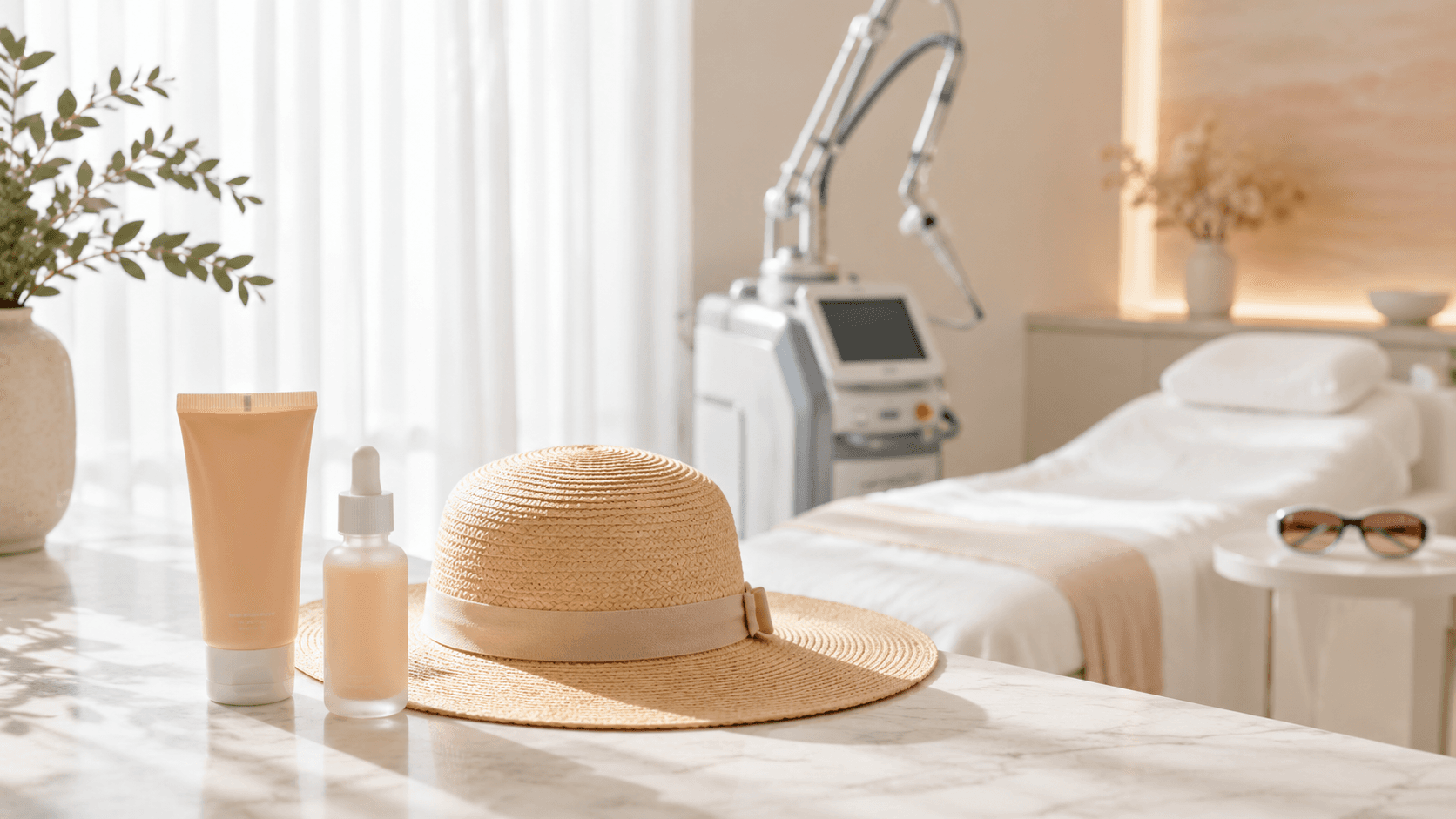
| Daily sun protection | Broad-spectrum sunscreen, tinted sunscreen with iron oxides, hats, shade | The foundation of every plan; prevents new pigment and protects results |
| Prescription topicals | Hydroquinone, prescription retinoids, combination creams | Used under medical supervision for a set period |
| Non-prescription topicals | Azelaic acid, vitamin C, niacinamide, tranexamic acid serums | Gradual, gentle support and maintenance |
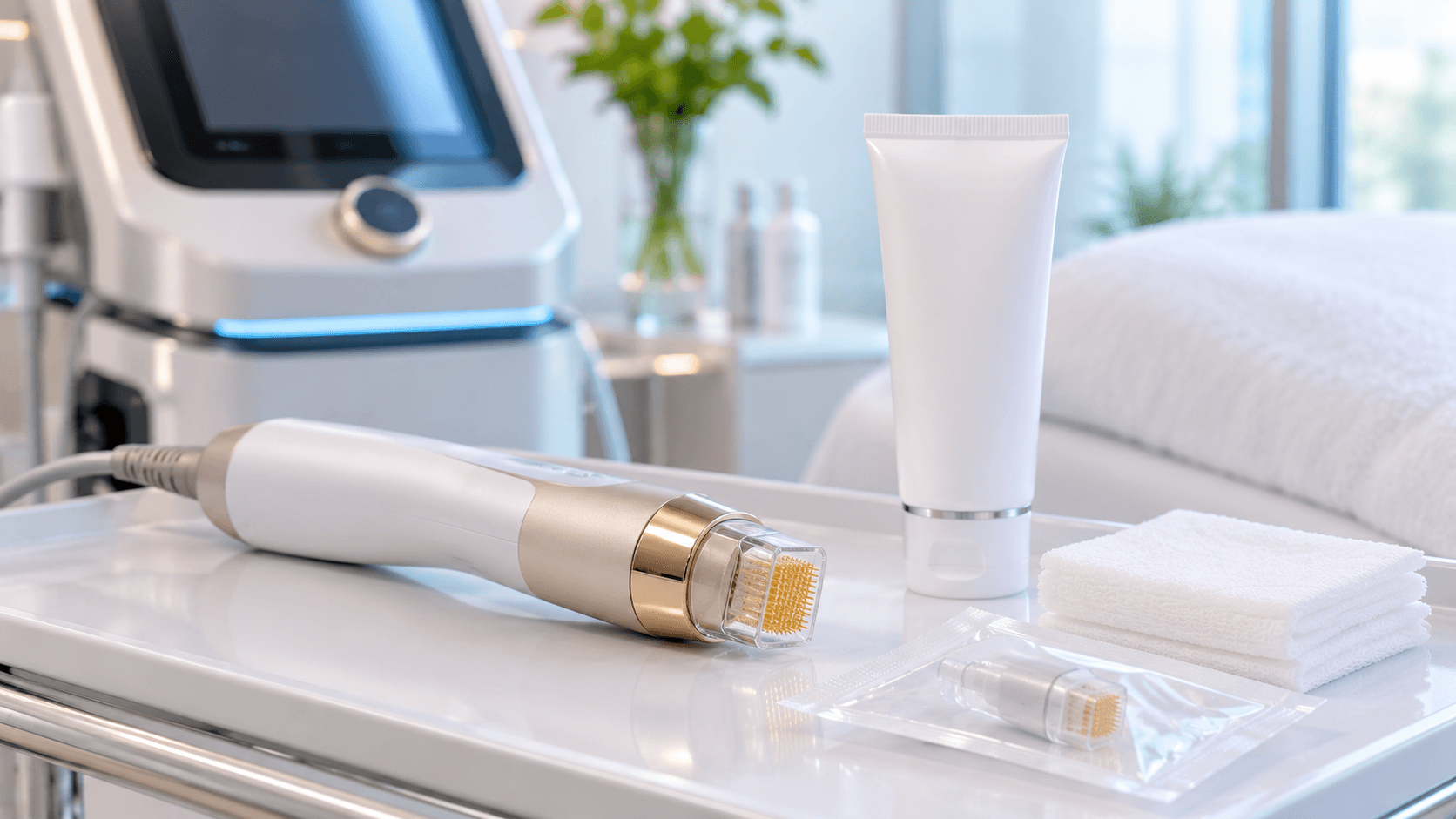
| In-clinic procedures | Chemical peels, lasers, light-based treatments, microneedling | Faster or more targeted improvement for suitable skin |
Topical treatments work slowly and need consistent use over months. Some, especially prescription-strength lightening creams, can irritate the skin or cause side effects if used incorrectly, so they should only be used as your doctor directs.
In-clinic treatments can speed up improvement or target specific spots, but they also carry more risk if the wrong treatment is chosen for your skin type or pigmentation type. Whatever you choose, daily sunscreen is not optional. In a sunny climate, skipping it can undo the benefit of any treatment.
Laser pigmentation removal
Laser pigmentation removal uses concentrated light energy that is absorbed by pigment in the skin. The energy breaks the pigment into smaller particles, which the body then clears or which shed with the skin’s natural turnover.
Different devices are used for different purposes:
- Pigment-targeting lasers, such as Q-switched or picosecond lasers, deliver very short pulses aimed at pigment and are often used for sun spots.
- Fractional lasers treat tiny columns of skin at a time and can help with texture as well as pigment.
- Intense pulsed light (IPL) is not a laser but uses a broad spectrum of light, and is often used for sun damage on lighter skin types.
After laser treatment, treated spots may darken temporarily before flaking off. Redness and mild swelling are common for a short time. Risks include burns, blistering and, importantly, worsening pigmentation or patches of lighter skin, particularly in darker skin tones or with melasma. This is why the device, settings and number of sessions must be chosen by a trained doctor after a skin assessment. Laser treatment does not guarantee permanent removal: new spots can form with sun exposure, and melasma can return.
Peels
Chemical peels use acids to remove the outer layers of skin in a controlled way, which can lift surface pigment and encourage new, more even skin to form.
Peels range in strength:
- Superficial peels, using ingredients such as glycolic, lactic, mandelic or salicylic acid, affect only the outermost layer. They usually involve little downtime and are often given as a course.
- Medium-depth peels reach deeper and can produce more visible peeling and a longer recovery.
Superficial peels are often a reasonable option for many skin types when done carefully. Deeper peels carry a higher risk of irritation and post-inflammatory pigmentation, especially for darker skin. After any peel, the skin is more sensitive to the sun, so strict sun protection is essential.
Choosing a treatment for your skin type
There is no single best treatment for hyperpigmentation on face skin that suits everyone. Doctors often describe skin types using the Fitzpatrick scale, which ranges from very fair skin that always burns (type I) to deeply pigmented skin that rarely burns (type VI).
In general:
- Lighter skin types may be suitable for a wider range of lasers and light treatments for sun spots.
- Medium to darker skin types, which are common in the UAE, have a higher risk of post-inflammatory pigmentation after aggressive treatments. Gentler options, carefully chosen laser settings, and a preparation period with topical treatment are often preferred.
- Melasma at any skin type usually needs a cautious, long-term approach focused on sun and visible-light protection, topicals and gentle procedures. Heat-heavy treatments can sometimes make it worse.
A good consultation should include a close skin examination, questions about your history, hormones, medicines and previous treatments, and a clear explanation of the plan, realistic expectations and risks.
If you are considering medical treatment for hyperpigmentation, the first step is a consultation with a licensed doctor who can identify your pigmentation type and recommend options that suit your skin.
FAQs
Can hyperpigmentation be removed permanently? Treatment can lighten many types of pigmentation, but new spots can form with sun exposure and melasma can return. Ongoing sun protection is key.
Is laser safe for darker skin? Some lasers can be used on darker skin with careful settings, but the risk of worsening pigmentation is higher. A doctor should choose the device and settings.
How long do creams take to work? Topical treatments usually need consistent use over several months.
Can melasma be treated with laser? Sometimes, cautiously, but melasma often needs a long-term plan led by sun protection and topicals, as heat can make it worse.
Do I need sunscreen indoors? If you sit near windows or under strong light, daily sunscreen is often advised. Ask your doctor what suits your routine.