
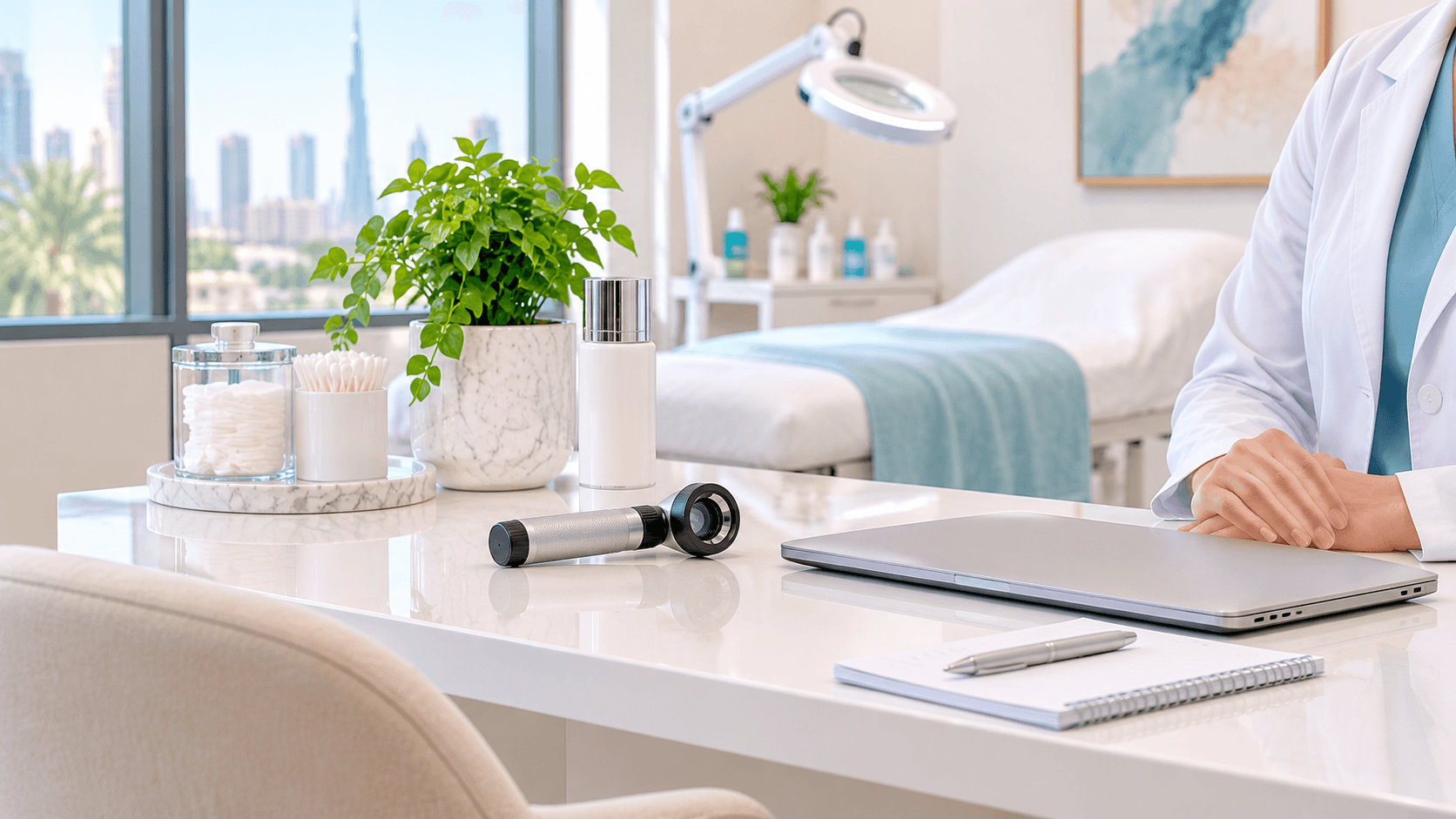
You have a skin concern and you want it looked at by the right person. But should you book a dermatologist or an aesthetic doctor? The two roles overlap, and many people are not sure where one ends and the other begins. Choosing the right professional can save you time, money and, in some cases, make sure a medical issue is not missed. This guide explains what each one does, which concerns suit which professional, and what to check when choosing a skin clinic in Dubai.
The information here is general. If you are unsure, a first consultation can help direct you to the right care.
What a dermatologist treats
A dermatologist is a medical doctor who has completed specialist training in conditions of the skin, hair and nails. Their training covers both medical and cosmetic skin concerns, with a strong focus on diagnosing and treating disease.
Dermatologists commonly treat:
- Acne, including persistent, severe or scarring acne
- Eczema and dermatitis
- Psoriasis
- Rosacea
- Skin infections, such as fungal, bacterial and viral infections
- Moles and skin checks, including assessing spots that change
- Suspected skin cancer
- Hair loss and scalp conditions
- Nail conditions
- Pigmentation disorders, such as melasma and vitiligo
Dermatologists can prescribe medicines, order tests, take skin biopsies and manage long-term conditions.
Some dermatologists also focus on cosmetic and procedural work, such as lasers, peels and injectables. An aesthetic dermatologist combines specialist medical knowledge of the skin with cosmetic treatments, which can be helpful when a cosmetic concern overlaps with a skin condition.
What an aesthetic doctor treats
An aesthetic doctor is a licensed medical doctor who has completed additional training in aesthetic, or cosmetic, procedures. Their background varies. Many trained first in general practice or another medical field before focusing on aesthetics.
Aesthetic doctors commonly offer:
- Anti-wrinkle injections for lines on the forehead, between the brows and around the eyes
- Dermal fillers for volume, contour and lips
- Skin boosters for hydration and skin quality
- Chemical peels
- Laser and energy-based treatments, such as hair removal, skin resurfacing and skin tightening
- Microneedling and similar procedures
Their focus is usually on improving appearance, such as skin quality, facial lines and volume, rather than diagnosing and treating skin disease.
A good aesthetic doctor will recognise when a concern needs a dermatologist and refer you on.
Medical vs cosmetic skin concerns
A simple way to decide who to see is to ask whether your concern is mainly medical or mainly cosmetic.
| Concern | Usually start with |
|---|---|
| A mole or spot that is new, changing, bleeding or itching | Dermatologist |
| Persistent rash, eczema or psoriasis | Dermatologist |
| Severe, painful or scarring acne | Dermatologist |
| Sudden or patchy hair loss | Dermatologist |
| Melasma or other complex pigmentation | Dermatologist or aesthetic dermatologist |
| Fine lines and wrinkles | Aesthetic doctor or aesthetic dermatologist |
| Loss of volume or facial contour | Aesthetic doctor |
| Dull or dehydrated skin | Aesthetic doctor or aesthetic dermatologist |
| Unwanted hair | Aesthetic doctor or laser specialist |
| Mild acne scarring or texture | Either, depending on the cause |
Some concerns sit in both camps. Acne scarring, pigmentation and hair loss often benefit from a medical diagnosis first, followed by cosmetic treatment. In these cases, a skin care clinic with both medical and aesthetic professionals can help you move between the two without starting over.
If you are ever unsure whether a spot or mole is safe, see a dermatologist before having any cosmetic treatment on it.
What to expect at a first consultation
Whether you see a dermatologist or an aesthetic doctor, a good first consultation usually includes:
- Your history. Questions about your concern, how long you have had it, what you have tried, your medicines, allergies and general health.
- An examination. A close look at your skin, sometimes using a magnifying device called a dermatoscope.
- A diagnosis or assessment. An explanation of what is likely causing the concern.
- Options. A discussion of suitable treatments, including medical and cosmetic approaches, home care, and what is realistic.
- Risks and costs. A clear explanation of side effects, downtime and expected costs.
- Next steps. Time to think before you agree to treatment, and written consent if you go ahead.
It helps to bring a list of the skincare products and medicines you use, photos if your concern comes and goes, and any previous test results.
A consultation should never feel like pressure to book. If a doctor recommends a different professional, that is a sign of good care.
Checking DHA licences
In Dubai, doctors must be licensed by the Dubai Health Authority (DHA) for the type of practice they carry out. Licence titles can help you understand a doctor’s training. For example, a doctor may be licensed as a general practitioner, a specialist or a consultant in a particular field, such as dermatology.
You can check a doctor’s licence through DHA’s Sheryan system, which lets you search for licensed healthcare professionals. When you check, look at:
- The doctor’s name and licence status
- Their specialty, such as dermatology
- Their title, such as specialist or consultant
- The facility they are licensed to work at
In Abu Dhabi, professionals are licensed by the Department of Health (DoH).
The right professional depends on your concern. If you are unsure where to start, a consultation at an aesthetic clinic in Dubai with access to both dermatology and aesthetic expertise can help guide you to the right care.
FAQs
Is an aesthetic doctor a dermatologist? Not necessarily. An aesthetic doctor is a licensed doctor with training in cosmetic procedures, while a dermatologist has completed specialist training in skin, hair and nail conditions.
Should I see a dermatologist for acne? For mild acne, many people start with good skincare. For persistent, painful or scarring acne, a dermatologist is usually the best place to start.
Can a dermatologist do Botox and fillers? Many dermatologists offer cosmetic treatments, especially those who focus on aesthetic dermatology.
Who should check a changing mole? A dermatologist. Do not have cosmetic treatment on a spot that has not been assessed.
How do I check a doctor’s licence in Dubai? Use DHA’s Sheryan system to search for licensed healthcare professionals and check their specialty and title.