

Home IV therapy brings an intravenous drip to your home, hotel or office instead of asking you to sit in a clinic. For busy residents and visitors in Dubai and Abu Dhabi, that convenience is the main appeal. But an IV is still a medical procedure, and a safe home visit follows the same clinical standards as a clinic appointment. This guide explains how an IV drip at home works, who gives it, what screening to expect and who should not have one.
The information here is general. Whether a drip is suitable for you is a decision for a licensed doctor after a medical screening.
What home IV therapy is
Intravenous (IV) therapy delivers fluids, and sometimes vitamins, minerals or other ingredients, directly into a vein through a small, flexible tube called a cannula. Because the fluid goes straight into the bloodstream, it bypasses the digestive system.
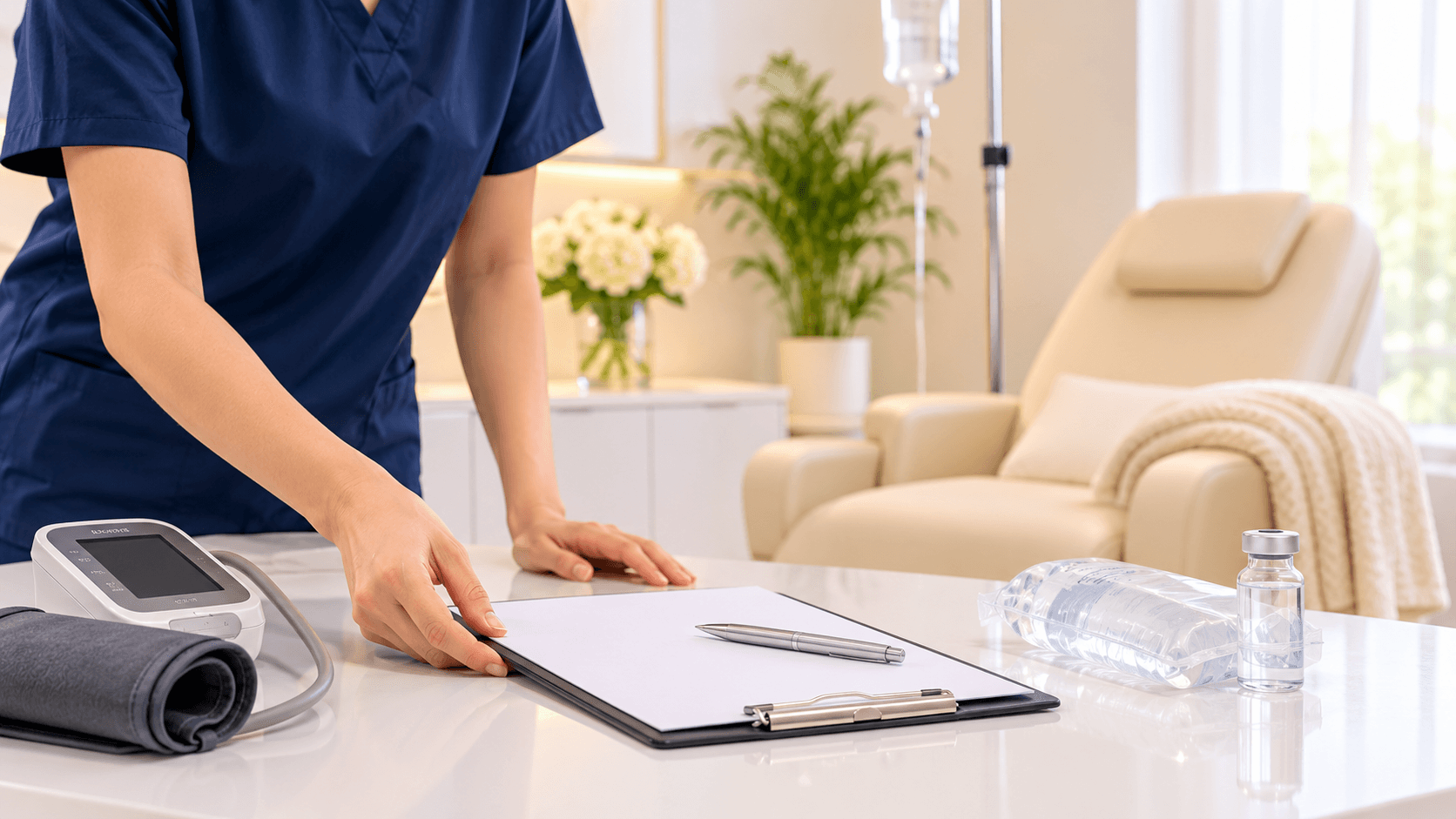
With at home IV treatment, the same process happens at a location you choose. A licensed nurse brings the prescribed drip, sterile equipment and monitoring tools, sets up the infusion, and stays with you until it is finished.
It helps to be clear about what home IV therapy is not. It is not emergency care, and it is not a substitute for seeing a doctor when you are unwell. If you have chest pain, difficulty breathing, confusion, severe dehydration or any other urgent symptom, call emergency services or go to a hospital instead.
Who administers it
An IV drip should only be given by a qualified healthcare professional. In the UAE, home healthcare services are regulated, and the nurse who visits you should hold a valid licence from the relevant health authority: the Dubai Health Authority (DHA) in Dubai, or the Department of Health (DoH) in Abu Dhabi.
A typical home IV visit involves two roles:
- A doctor reviews your screening information and decides whether a drip is appropriate, and which one.
- A licensed nurse carries out the visit: checking your vital signs, inserting the cannula, running the infusion, monitoring you throughout and removing the line safely.
It is reasonable to ask the provider for the nurse’s name and licence details before the visit. A reputable service will be happy to share them.
Booking and screening steps
A responsible home IV service does not simply send a drip to whoever asks for one. The process usually looks like this:
- Request. You contact the provider with your location and preferred time.
- Medical screening. You answer questions about your health, current medicines, allergies, pregnancy status and any previous reactions to IV treatment. A doctor reviews your answers.
- Doctor’s decision. The doctor confirms whether a drip is suitable and which formulation, or advises against it.
- Home visit. The nurse arrives, confirms your identity and consent, and checks your blood pressure, pulse and temperature before starting.
- Infusion and monitoring. The drip runs while the nurse watches for any reaction. Many infusions take somewhere between 30 and 60 minutes, though this depends on the drip.
- Aftercare. The cannula is removed, a dressing is applied, and you are told what to watch for and who to call.
Screening is a medical requirement, not a formality. Be honest and complete in your answers. Information about heart, kidney or liver conditions, blood-thinning medicines and allergies can change whether a drip is safe for you.
On the day, wear a top with sleeves that roll up easily, have something light to eat beforehand unless told otherwise, and choose a comfortable spot where you can sit or lie down for the full session.
Common drip types
Providers offer a range of drips, and names vary from clinic to clinic. Most fall into a few broad groups:
- Hydration drips. Mainly saline or a balanced electrolyte solution, used to replace fluids.
- Vitamin drips. Fluids combined with vitamins such as the B-complex group or vitamin C.
- Mineral blends. Fluids with minerals such as magnesium or zinc.
- Combination drips. Mixtures marketed for travel recovery, energy or wellness.
Whatever the name, ask exactly what is in the bag and in what amounts. Marketing labels describe a purpose, not the contents. The evidence for many wellness drips in healthy people is limited, and a drip does not cure illness or boost immunity. If you have a diagnosed vitamin deficiency, your doctor may recommend testing and a specific treatment plan, which may or may not involve IV therapy.
Safety and who should avoid it
For most healthy adults, a properly screened and supervised drip carries a low risk of serious problems. Side effects can still happen, including:
- Bruising, discomfort or swelling where the cannula was placed
- A cool sensation or a metallic taste during the infusion
- Irritation or inflammation of the vein
- Allergic reactions to an ingredient, which can occasionally be serious
- Infection at the insertion site, which is uncommon when sterile technique is used
IV therapy may not be suitable, or may need extra caution, if you have:
- Heart failure or other heart conditions
- Kidney or liver disease
- High blood pressure that is not well controlled
- A known allergy to any ingredient
- G6PD deficiency, which can make high-dose vitamin C unsafe
- Pregnancy or breastfeeding, unless your own doctor has approved it
- Conditions that affect how your body handles fluids or salts
This list is not complete, which is why the doctor’s screening matters. Tell the nurse straight away if you feel dizzy, short of breath, itchy, flushed, or notice pain or swelling around the drip. After the visit, contact the provider or seek medical help if you develop redness, heat or swelling at the site, a fever, or any symptom that worries you.
Choosing a home IV service
Before you book, check that the provider:
- Is a licensed healthcare facility in the emirate where you are
- Requires a medical screening reviewed by a doctor
- Sends a licensed nurse and can share their credentials
- Tells you exactly what is in each drip
- Gives clear aftercare advice and a contact number
If you are considering IV therapy at home, start with the screening and an honest conversation with the medical team about whether a drip is right for you. You can find more about the service, including home IV therapy in Abu Dhabi, on Skin111’s IV drip at home page.
FAQs
Is an IV drip at home safe? For most healthy adults, a drip given after a doctor’s screening and by a licensed nurse carries a low risk of serious problems. Side effects can still occur, which is why monitoring matters.
Who gives the drip during a home visit? A licensed nurse, following a drip prescribed by a doctor after your screening.
How long does a home IV session take? Many infusions take 30 to 60 minutes, plus time for checks before and after. Your provider will confirm the timing for your drip.
Can IV drips cure illness or boost immunity? No. IV drips can replace fluids and deliver vitamins or minerals, but they are not a cure for illness and should not replace medical care.
Do I need a medical screening every time? Your health, medicines and circumstances can change, so expect the provider to review your screening before each visit.