
If you want a skin treatment that fits into a lunch break and does not leave you hiding at home afterwards, a HydraFacial is one of the options people ask about most. It is often described as a deep cleanse and hydration treatment in one, and it is popular in a climate where heat, humidity, sunscreen and air conditioning all take a toll on the skin. This guide explains what a HydraFacial in Dubai involves, step by step, who it suits, how often people book, and what affects the price.
As with any skin treatment, results vary between individuals. A skin assessment before your first session helps make sure the treatment is right for you.
What HydraFacial is
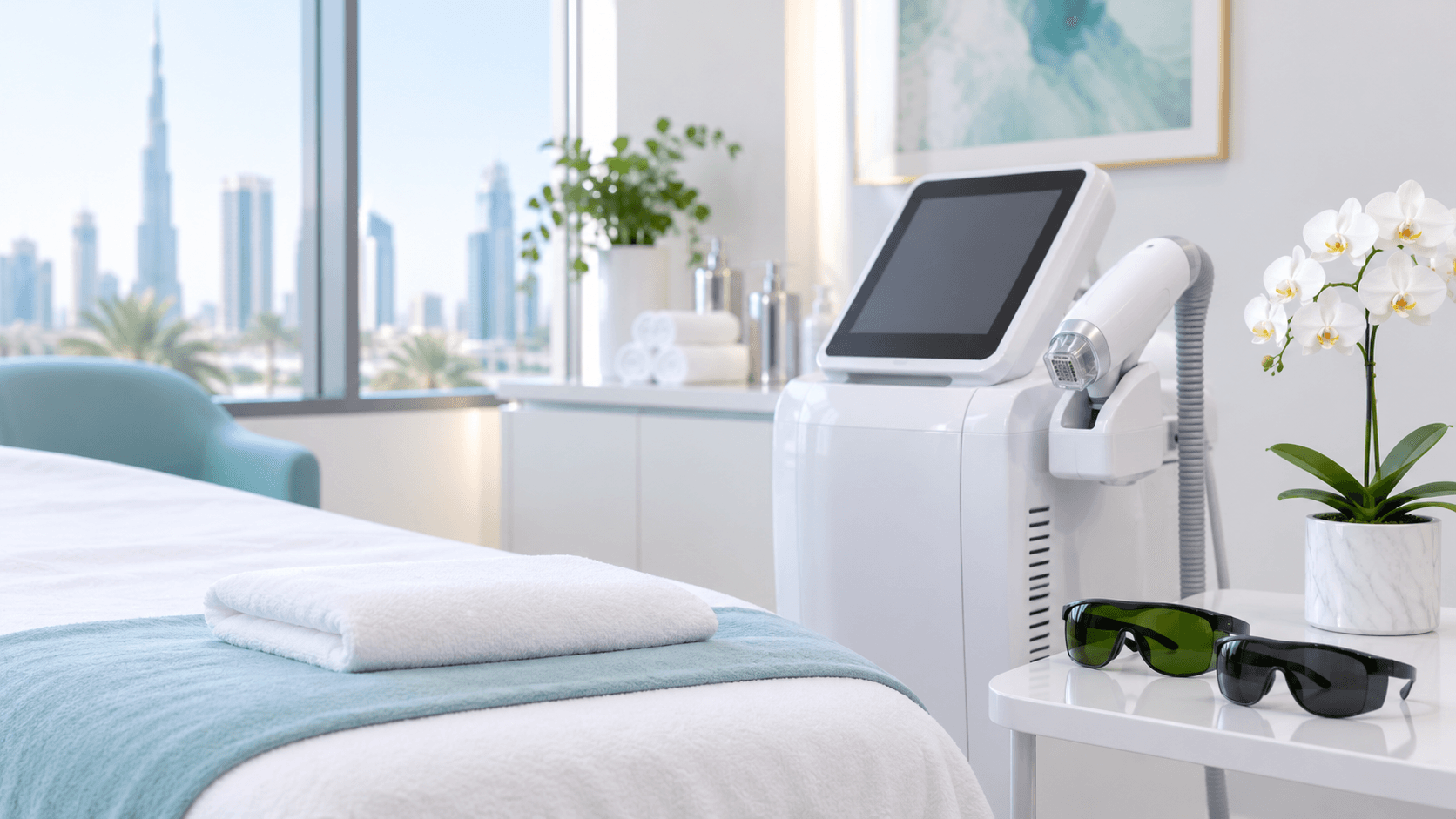
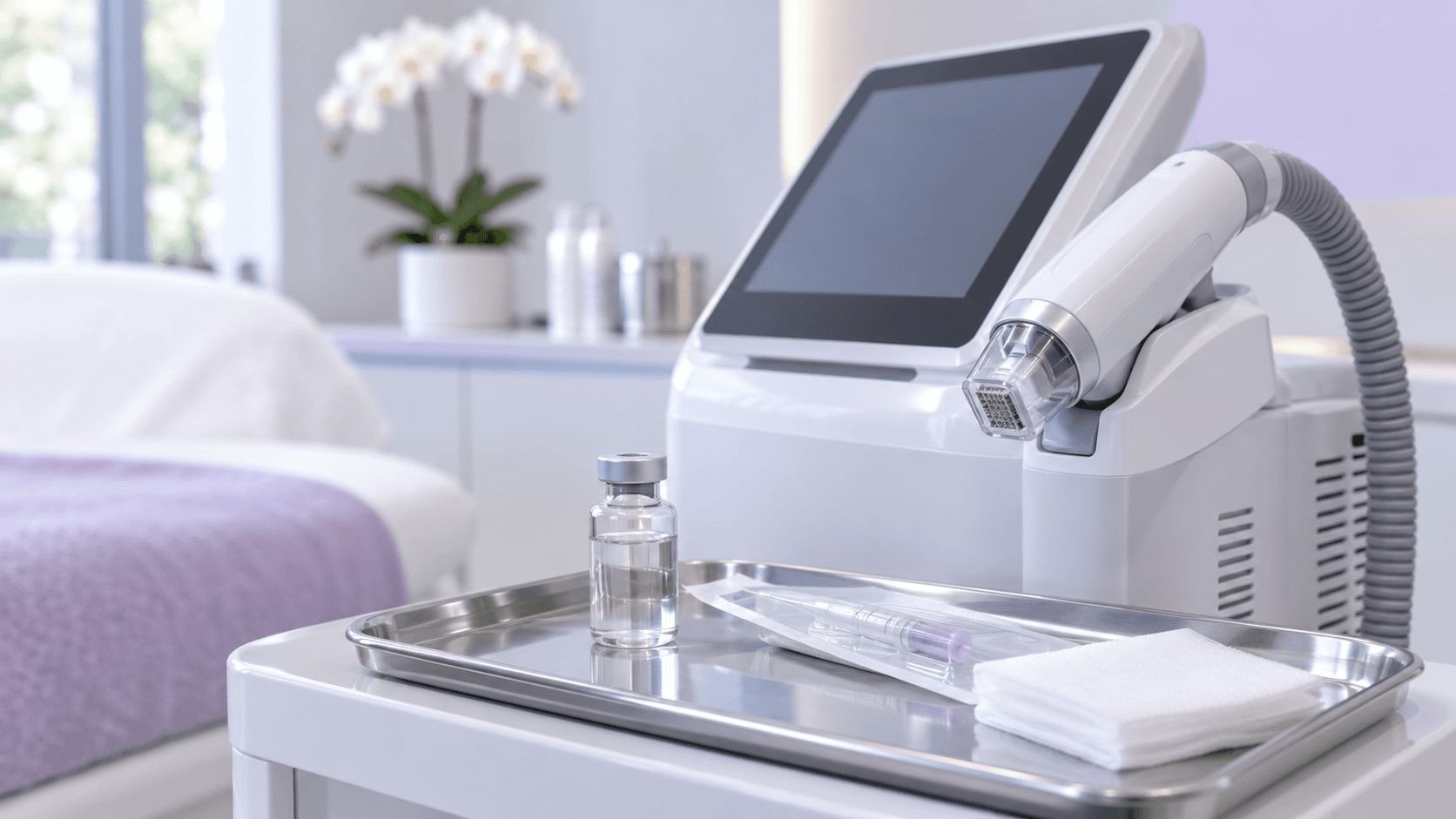
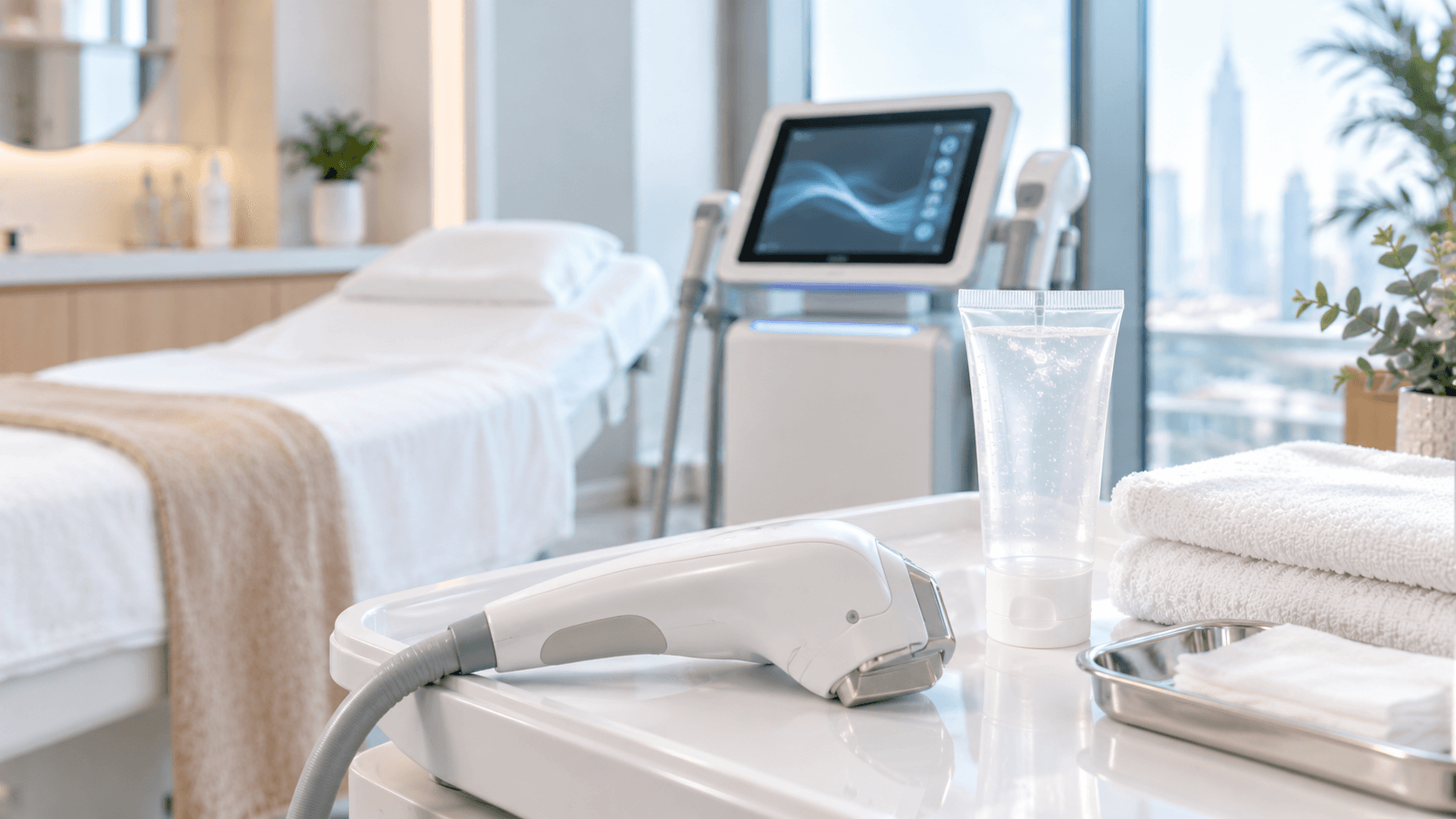
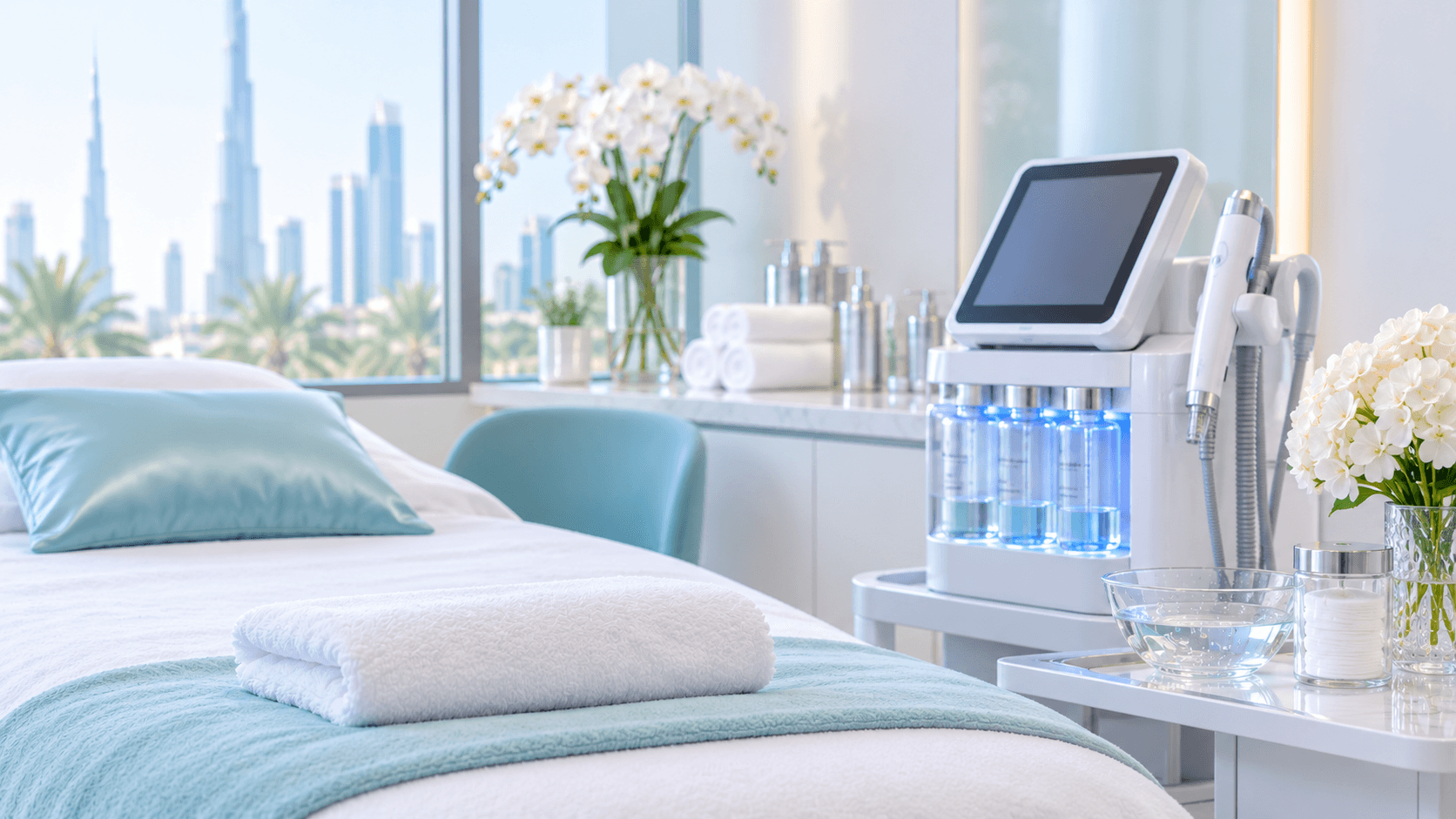
HydraFacial is a branded skin treatment performed with a dedicated device. It combines several steps that would normally be done separately in a facial: cleansing, exfoliation, extraction and hydration. The device uses a handpiece with a vortex-style tip that cleans and exfoliates while drawing out debris, and then infuses serums into the skin.
Because it is a branded system, a genuine HydraFacial uses the manufacturer’s device, tips and serums. Some clinics offer similar “hydra” or “aqua” facials using different devices. These can also be good treatments, but they are not the same thing, so it is worth asking which system a clinic uses.
A HydraFacial is generally considered a gentle, non-invasive treatment. It does not involve needles, and most people can return to their normal routine straight away.
The treatment steps
A standard HydraFacial treatment usually follows these stages:
- Skin assessment. Your practitioner looks at your skin, asks about your skincare routine, medicines and any sensitivities, and chooses suitable serums and boosters.
- Cleanse and exfoliate. The handpiece moves across the skin, removing surface dead cells and impurities.
- Gentle peel. A mild acid solution, typically containing ingredients such as glycolic and salicylic acid, is applied to loosen debris in the pores. It is designed to be gentle, so it does not cause the visible peeling of a stronger chemical peel.
- Extraction. The vortex suction draws out congestion from the pores, often focusing on the nose, chin and forehead. This is usually painless, unlike manual extraction.
- Hydrate and protect. Serums containing ingredients such as hyaluronic acid, antioxidants and peptides are infused into the skin.
- Optional add-ons. Depending on the clinic, the treatment may include targeted boosters, LED light therapy or lymphatic drainage.
A standard session usually takes around 30 to 60 minutes, depending on the add-ons.
Most people describe the sensation as a cool, gentle suction, similar to a light massage. Some feel slight tingling during the peel step.
Who it suits
One reason for HydraFacial’s popularity is that it suits a wide range of people and skin types. People commonly book it for:
- Dull or tired-looking skin
- Congested pores and blackheads
- Dryness or dehydration
- Oily or combination skin
- Uneven texture
- Preparing skin before an event
It is often a gentle option for people who are new to clinic treatments, or who want regular maintenance between stronger treatments.
A HydraFacial may need to be postponed, or adjusted, if you:
- Have active rosacea, a flare of eczema or very inflamed acne
- Have sunburn, open wounds or an active skin infection, including cold sores
- Have taken isotretinoin recently, as skin can be more fragile
- Have an allergy to aspirin or salicylates, since salicylic acid is often used
- Are pregnant or breastfeeding, as some ingredients may need to be avoided
- Have recently had a strong peel, laser or injectable treatment in the area
Tell your practitioner about any prescription skincare, such as retinoids, as you may need to pause them for a short time before treatment.
Aftercare
Your skin may look slightly pink for a few hours, but downtime is usually minimal. To help your skin afterwards:
- Avoid heavy make-up for the rest of the day if possible
- Skip exfoliating scrubs, acids and retinoids for a day or two, or as advised
- Avoid saunas, steam rooms and intense exercise on the day of treatment
- Use a broad-spectrum sunscreen, especially important in the UAE
- Keep the skin hydrated
Contact your clinic if you notice anything other than mild, short-lived redness.
How often to book
There is no single rule. Many people book a HydraFacial about once a month, which roughly matches the skin’s natural renewal cycle. Others book occasionally, for example before an event or when their skin feels congested.
The right frequency depends on:
- Your skin type and concerns
- How your skin responds
- Other treatments you have, such as peels or lasers
- Your budget and routine
Your practitioner can suggest a schedule. A HydraFacial works best alongside a good daily routine with cleansing, moisturising and sunscreen, rather than as a replacement for it.
HydraFacial price factors
The cost of a HydraFacial varies between clinics, and a quote for HydraFacial price in Dubai usually depends on:
- The treatment level. Clinics often offer different versions, from a basic facial to more comprehensive treatments.
- Boosters and add-ons, such as targeted serums, LED or lymphatic drainage.
- The areas treated. Some clinics offer neck, décolletage, back or scalp treatments as extras.
- Whether it is a genuine HydraFacial system or a similar device.
- Packages, which may reduce the cost per session for regular visits.
When comparing prices, check that you are comparing the same treatment level and system.
Is HydraFacial right for you?
A HydraFacial can be a comfortable, low-downtime way to cleanse and hydrate the skin, and it suits many skin types. The best way to decide is a short skin assessment, where a practitioner can check your skin and recommend whether this or another treatment suits you better. You can read more about the treatment in Dubai and about HydraFacial in Abu Dhabi on Skin111’s HydraFacial page.
FAQs
Does a HydraFacial hurt? Most people find it comfortable. It feels like a cool, gentle suction, with slight tingling during the peel step.
Is there downtime? Usually very little. Mild redness may last a few hours, and most people return to normal activities straight away.
Can I have a HydraFacial if I have acne? It can help with congestion, but very inflamed or active acne may need a different approach first. Your practitioner will advise.
How long does a session take? Around 30 to 60 minutes, depending on the treatment level and add-ons.
Can I wear make-up afterwards? It is best to keep make-up light or avoid it for the rest of the day.
Is a HydraFacial suitable during pregnancy? Some ingredients may need to be avoided. Tell your practitioner, and check with your doctor first.