

Dubai has no shortage of places offering injectables, lasers and skin treatments. With so many options, choosing where to go can feel overwhelming, and polished social media pages do not always tell you what matters most. Whether you are booking your first treatment or switching providers, the right aesthetic clinic in Dubai should be able to answer a few straightforward questions clearly and confidently.
This guide covers what to check before you book, from licensing and qualifications to aftercare and warning signs, and finishes with 10 questions you can take to any consultation.
Licensing and DHA registration
Aesthetic treatments such as injectables, medical lasers and chemical peels are medical procedures. In the UAE, the facilities that offer them and the professionals who perform them must be licensed by the relevant health authority:
- Dubai Health Authority (DHA) for most facilities in Dubai
- Dubai Healthcare City Authority for facilities inside Dubai Healthcare City
- Department of Health (DoH) in Abu Dhabi
- Ministry of Health and Prevention (MOHAP) in the other emirates
Licensing applies to two things: the facility and the individual practitioner. A licensed clinic should employ licensed professionals, and each professional should be licensed for the type of work they do.
You can ask a clinic for its facility licence details and for the licence details of the person treating you. Health authorities offer online services where licensed facilities and professionals can be checked. A reputable clinic will share this information without hesitation.
Be cautious about treatments offered in salons, hotel rooms, homes or at “parties” unless the provider can show the appropriate licence for that service.
Doctor qualifications to check
The person performing your treatment matters as much as the treatment itself. Before booking, find out:
- Who will treat you. Is it a doctor, a dermatologist, a plastic surgeon, a nurse or a therapist? Some treatments must be carried out or supervised by a doctor.
- Their training. Ask about their medical background and specific training in the procedure you want.
- Their experience. How often do they perform this treatment, and do they treat people with skin like yours? This is especially important for lasers and pigmentation treatments in medium and darker skin tones.
- How they manage complications. Experienced practitioners plan for rare problems, not just routine results.
Titles such as “aesthetician”, “skin expert” or “specialist” are not medical qualifications on their own. Ask what they mean.
Consultation quality
A proper consultation is one of the clearest signs of a good clinic. It should feel like a medical appointment, not a sales pitch.
A good consultation usually includes:
- A full medical history, including medicines, allergies, previous treatments and pregnancy or breastfeeding
- An examination of the area you want treated
- An honest discussion of what is realistic for you, including when a treatment is not suitable
- A clear explanation of the procedure, side effects and risks
- Time to ask questions and think before you agree
- Written consent before treatment
The best skin treatment in Dubai is the one that suits your skin, your goals and your health, not the one with the most attractive offer. A clinic that is willing to say “this isn’t right for you” is often one you can trust.
Product and device authenticity
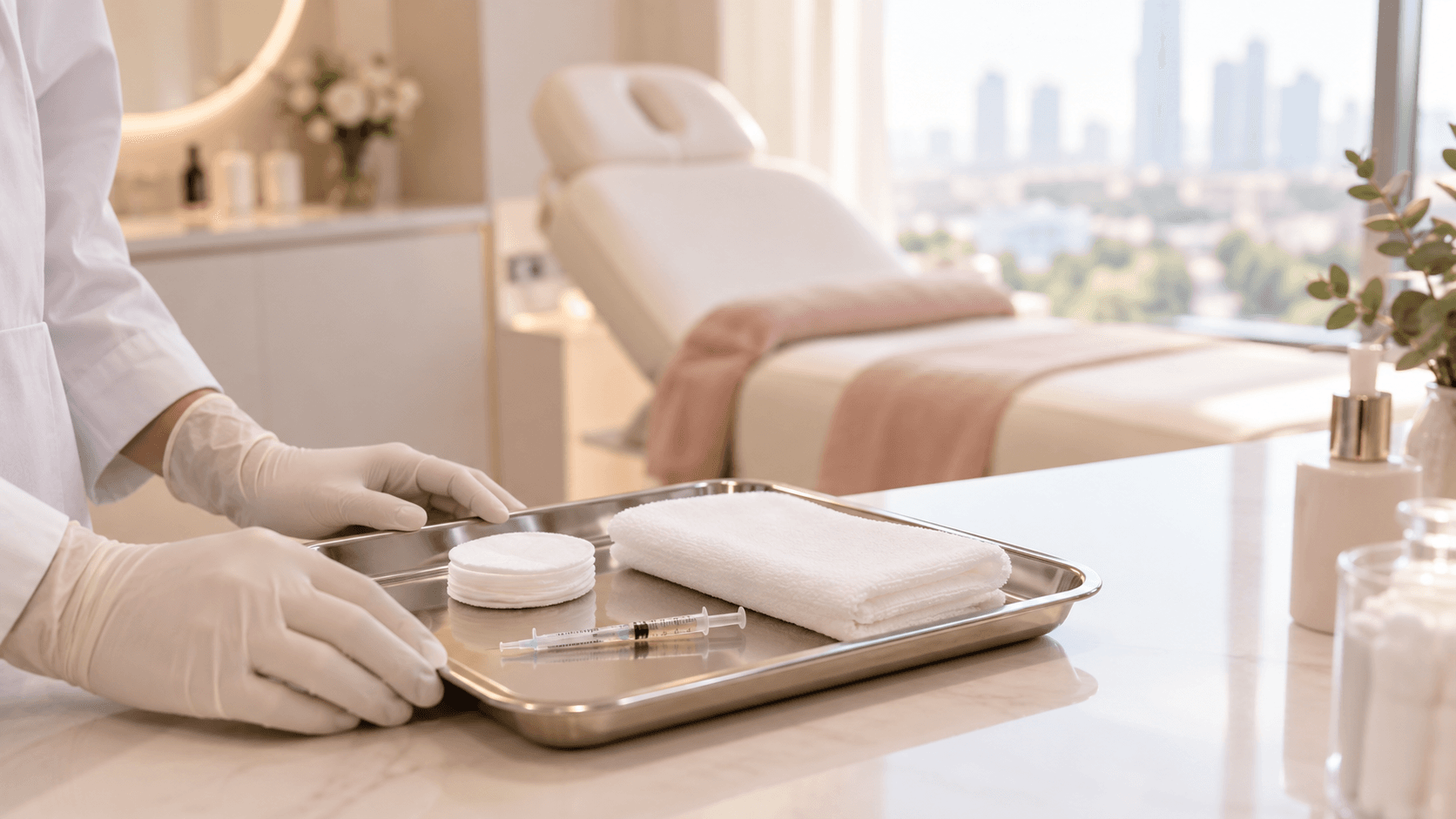
Counterfeit or unapproved fillers, injectables and devices are a real concern worldwide. Using genuine, approved products is essential for safety.
You can ask:
- Which product or device will be used, by brand name
- Whether the product is approved for use in the UAE
- Whether you can see the sealed packaging before treatment
- Whether you will receive the product details, such as batch number, for your records
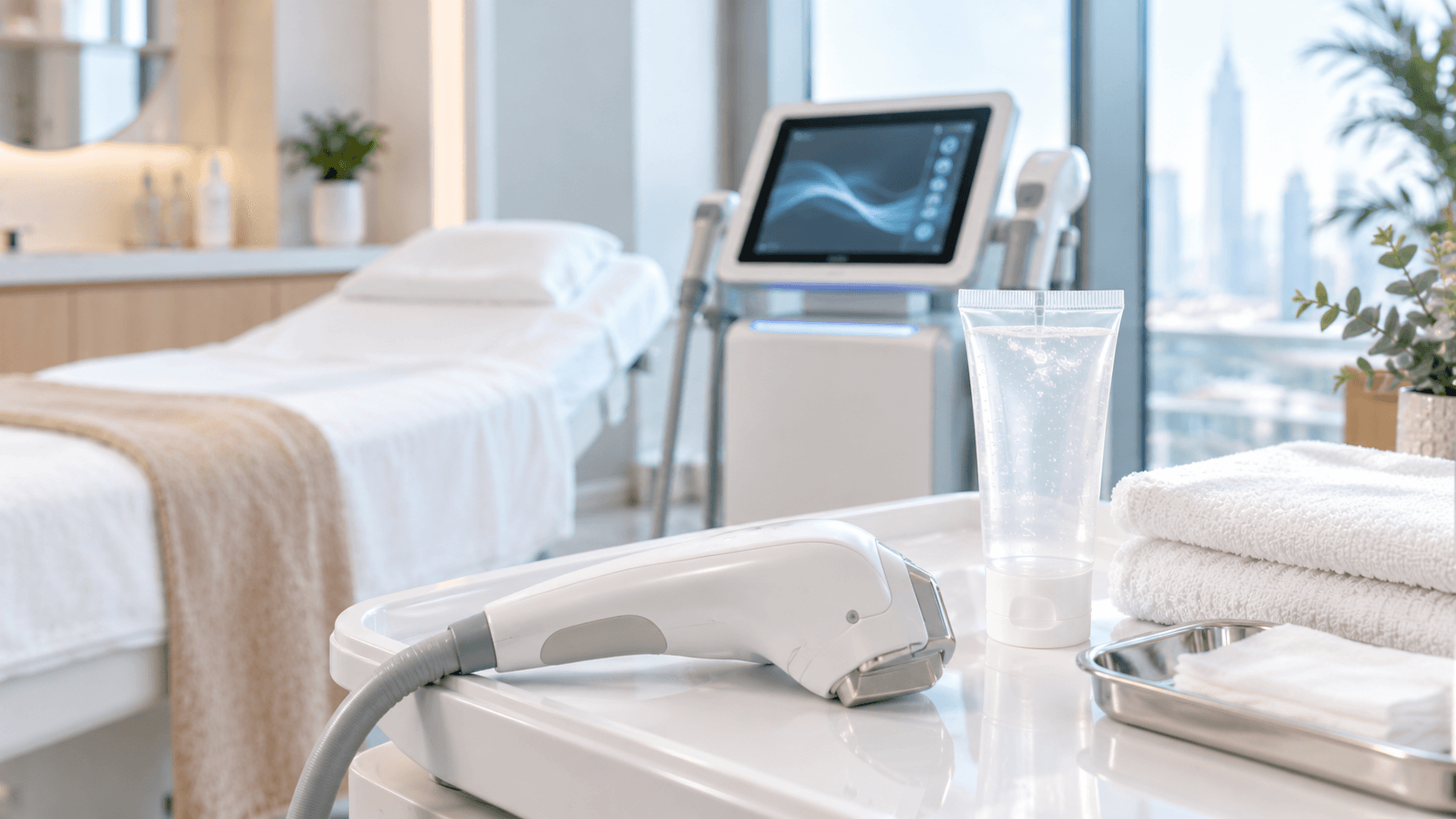
For device-based treatments, such as lasers or ultrasound, ask which device is used and who operates it. Genuine devices need trained operators and regular servicing.
Aftercare and follow-up
What happens after your treatment is just as important as the treatment itself. A good clinic will:
- Give you written aftercare instructions
- Explain which reactions are normal and which are warning signs
- Provide a contact number for concerns, including outside working hours
- Offer a review appointment where appropriate
- Have a clear plan for managing complications
Ask about follow-up before you book. If a clinic cannot tell you who to contact if something goes wrong, that is an important warning sign.
Red flags
Be cautious if a clinic or practitioner:
- Cannot or will not show licence details
- Skips a medical history or consultation
- Pressures you to book or pay on the day, or pushes extra treatments
- Offers prices that seem unusually low
- Promises guaranteed or permanent results
- Will not tell you which product or device is used
- Offers treatment outside a licensed facility
- Has no clear aftercare or emergency plan
Lists and rankings of top aesthetic clinics in Dubai can be a starting point, but they are no substitute for checking these basics yourself.
10 questions to ask before you book
- Is the clinic licensed by the relevant health authority, and can I see the details?
- Who will perform my treatment, and are they licensed for it?
- What training and experience do they have with this treatment?
- Have they treated people with my skin type?
- Is this treatment suitable for me, and are there alternatives?
- What are the risks and possible side effects?
- Which product or device will be used, and is it approved in the UAE?
- Can I see the sealed product before treatment?
- What aftercare and follow-up are included?
- Who do I contact if I have a problem, including out of hours?
A good clinic will welcome these questions. Taking time to ask them helps you choose an aesthetics clinic that puts your safety first.
FAQs
How can I check if a clinic is licensed? Ask the clinic for its licence details, then check them using the relevant health authority’s online services.
Should a doctor perform my treatment? It depends on the treatment. Injectables and many medical procedures must be performed or supervised by a licensed doctor. Ask who will treat you.
Are cheaper clinics less safe? Not always, but very low prices can be a warning sign. Check the product, the practitioner and the aftercare, not just the price.
What should happen at a consultation? A medical history, an examination, an honest discussion of suitability and risks, and time to decide before giving written consent.
What if something goes wrong after treatment? Contact the clinic straight away. A good clinic will give you a contact number and have a plan for managing complications.